From first notice to the next decision, with the evidence in hand
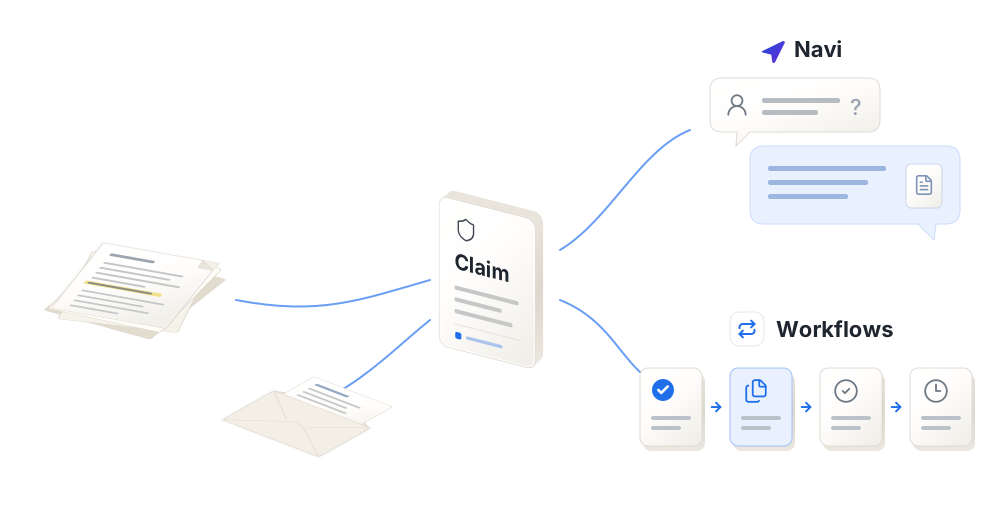
Claim documents arrive by email, as attachments, scans and spreadsheets, and they keep arriving for years. Navi takes each one in, keeps the claim record current, checks what's new against the wording and your rules, and prepares the next step for your handler to approve.
For complex casualty, property/BI and financial lines claims
On a complex file, the admin comes before the judgement
Rereading to catch upEvery new report means going back through the file to work out what it changes, and whether it changes the reserve or the coverage position.
Keeping every party in stepInsurers, co-insurers, reinsurers, brokers, adjusters, lawyers and experts all add to the file, often in different countries. Tracking who said what, and what's still outstanding, falls to the handler.
Chasing and referring by handInformation requests, insurer reports and referrals get written from scratch, and the evidence has to be found again each time.
Keying in the notificationFirst notice comes as an email chain, a broker's loss notice and a scanned form. Someone has to turn that into a claim record before anyone can assess it.
One claim, from the first email to the next review
Navi works on the documents your handlers already receive. Each step leaves a record, and each point links back to its source.
- 01
Turn incoming documents into a claim record
Forward the notification to Navi or upload the documents. Navi reads emails, attachments, scans and spreadsheets, pulls out the claim details and fills your standard claim format. It also writes a first-notice summary for the handler, and the record is ready to export or send to your team.
More on intake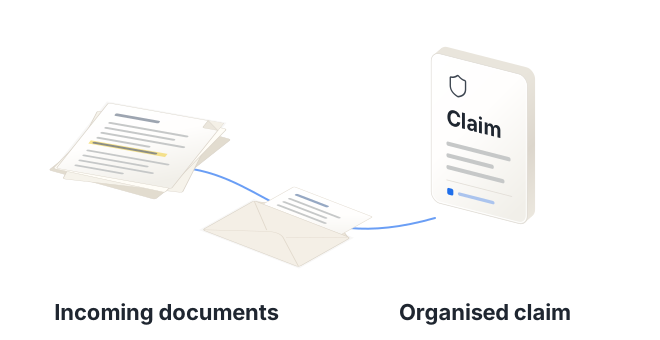
- 02
See what moved since the last review
Each new report, letter or invoice is added to the claim and read against what's already on the file. The chronology, parties and reported figures stay current.
Open the file and start with what moved: a new claimant, a revised costs estimate, a shift in liability or coverage, a change in quantum or reserves, conflicting expert views, a document that's still missing or an action still outstanding. Each point links to its page.
More on what changed on the file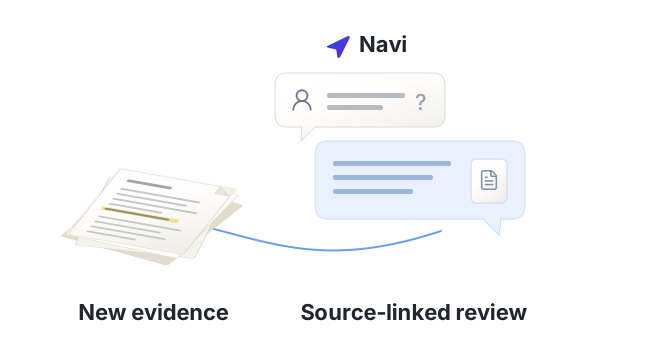
- 03
Test new facts against the wording
As new facts come in, Navi checks the date, location, parties and cause of loss against the wording, endorsements and exclusions, and flags where cover may be in question, citing the clause. The coverage position stays with your handler.
More on coverage checks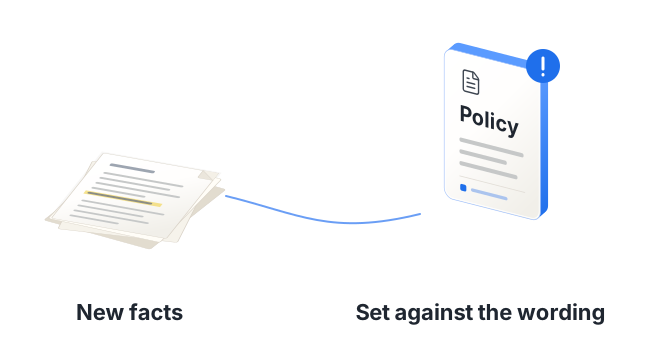
- 04
Report to each insurer from the file
Navi drafts the periodic report to each insurer client in their format, with every figure linked to its page. Your handler checks the draft before it's sent.
More on insurer reports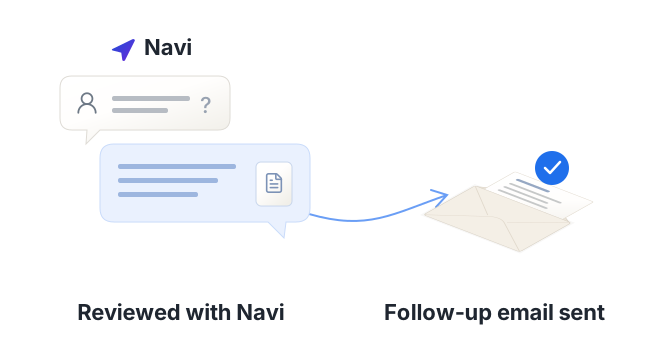
- 05
Escalate what meets your criteria, and keep track
Set the escalation criteria your team already works to, such as a reserve movement above a threshold, a new jurisdiction or a coverage question. Navi flags the files that meet them and drafts the referral with the relevant pages attached. It also drafts information requests and follow-ups for your handler to approve, then keeps track of what's still outstanding.
More on escalation and follow-ups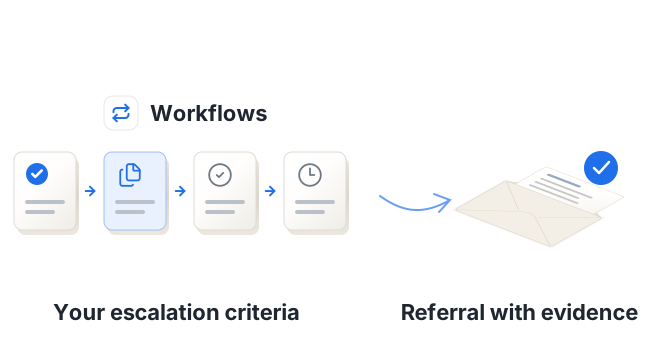
Every claim prepared for the next decision
- A structured claim record in your format, ready to export
- A chronology and change log for every claim, linked to source pages
- Coverage questions flagged against the wording, with the clause cited
- Referrals and information requests drafted with the evidence attached
- Outstanding requests tracked until they're answered
- Your handler's review and decision recorded on the file
Built for the teams that work complex claims
InsurersHandlers start each review from what changed, and referrals reach the claims committee with the evidence already attached.
TPAs and loss adjustersAdjusters spend less time rebuilding files and writing reports, and your reporting to insurer clients is easier to stand behind.
See a complex claim worked end to end
We'll follow a multi-country product liability claim from the first notification through the documents that arrive later, and show what Navi flagged and drafted for the handler to approve at each step. Then we'll scope a pilot on your own files.
Hosted in Europe · SOC 2 Type II · GDPR compliant
