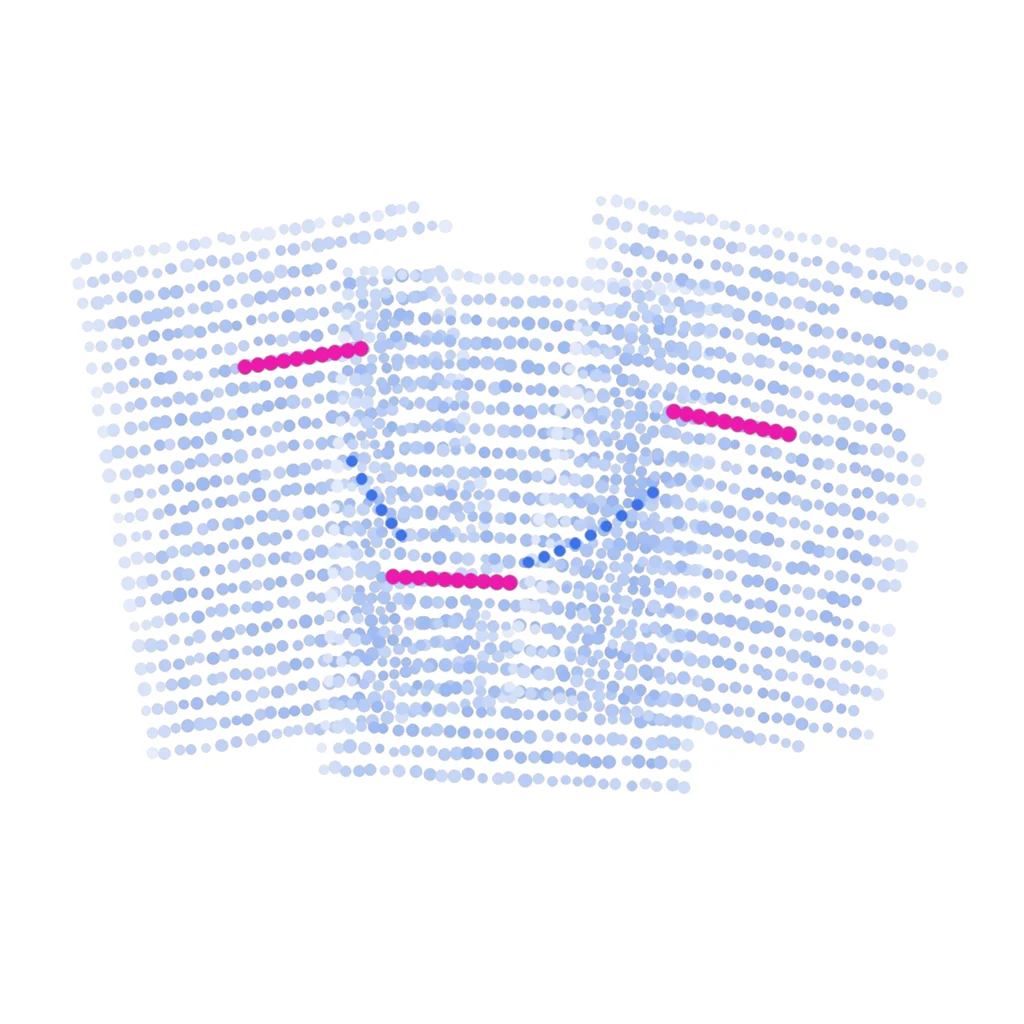
TLDR: Most insurance fraud is a genuine claim with an inflated amount. AI editing tools now make it easy to change a photo or an invoice, and current tools that analyse image pixels often cannot detect these edits. A more reliable approach is to check whether the documents in a claim agree with each other: if someone edits the total on an invoice, the line items, the police report and the policy dates also need to match. Below we summarise the research on both approaches and how Parsewise can help.
The size of the problem
Insurance Europe estimates that fraud, detected and undetected, accounts for about 10% of claims spending in Europe. In the UK, insurers detected 98,400 fraudulent general insurance claims in 2024, worth £1.16bn. The largest category was exaggerated loss at £466m, where the incident is real but the amount claimed is inflated.
~10%
of European claims spending lost to fraud
£1.16bn
of fraud detected by UK insurers in 2024
99%
of US insurers have seen AI-altered documents
AI editing is making this easier. In a 2026 Verisk survey of US claims professionals, 99% said they had seen manipulated or AI-altered documents, and 76% said these were getting harder to spot. Allianz UK reported a 300% increase in manipulated images, videos and documents in one year. Most of these are edits to real files, such as damage added to a photo of a real car or a changed total on a real invoice.
Claims teams therefore have two problems. The special investigations unit (SIU) can only review a small share of claims, so they need to decide which ones to review. And they can no longer assume the documents in a claim are genuine.
Where fraud can be detected
Fraud indicators can be found at five levels, from a single file to patterns across all of an insurer’s claims.
Five levels of fraud checks
The file
PDF edited after it was created
Each document
Line items do not add up
The claim
Documents disagree on the date
Outside the claim
Garage not registered at that address
Across claims
Same photo in an earlier claim
Most new fraud detection technology focuses on the first level, checking individual files. Adjusters have traditionally found fraud at the other levels. These are also harder to fake, because a forger would need every document in the claim to match.
Pixel analysis struggles with documents
Image forensics tools look for traces of editing, such as compression or noise patterns that differ in one part of an image. They were mostly developed and tested on photographs. Documents are harder to analyse because they are mostly white space and an edited number covers a very small area. DocForge-Bench (2026) found that edited regions cover between 0.27% and 4.17% of a document, and that none of the detectors it tested worked reliably across different document types.
AI editing makes this worse. The AIForge-Doc v2 study (2026) took 3,066 receipts and edited the numbers on them in two ways: with traditional editing (pasting in parts of other images or documents) and with OpenAI’s GPT-Image-2. It then showed detectors and people pairs of receipts, one genuine and one edited, and measured how often they picked the edited one. Picking at random gets 50%.
Detectors catch traditional edits, but not AI edits
Both detectors spot most traditional edits but are close to guessing on AI edits. GPT-Image-2 also could not reliably recognise its own edits, and labelled 84.7% of them as genuine. An earlier version of the study, using older image models and GPT-4o as a judge, found similar results. GPT-4o is no longer a frontier model, and image models keep improving. Models released this month, such as FLUX.3 and MiniMax H3-Image, have open-weight versions that can edit images, so anyone can run them without a watermark or usage limits. Detection is likely to get harder.
These detectors are still useful, especially for photos and when tuned on an insurer’s own data, but they should not be the only check.
Detecting edited and AI-generated photos
There are two kinds of fake claim photo: a real photo that has been edited (for example, damage added in Photoshop or with an AI tool), and a photo generated entirely by AI. There are three main types of check.
Three types of photo check and their limitations

Watermarks
Does the file say it was made by AI?
Challenge: No label does not mean genuine
Edit forensics
Has part of the photo changed?
Challenge: Compression removes the traces

AI image detectors
Did a camera take this?
Challenge: Newer AI models are getting harder to spot
Watermarks and provenance. Some AI tools label the images they create. ChatGPT and Adobe Firefly attach C2PA Content Credentials, which is signed metadata, and Google’s SynthID adds an invisible watermark to the pixels. In an Ars Technica test, SynthID was still detected after hundreds of rounds of compression, until the image was also cropped. The limitations are that SynthID only covers Google’s tools, metadata is usually removed when a file is edited or shared, and open-source models run locally add no label. As OpenAI’s documentation notes, a missing label does not mean an image is genuine. The example above is an AI-generated image with a visible “ai” label in the corner.
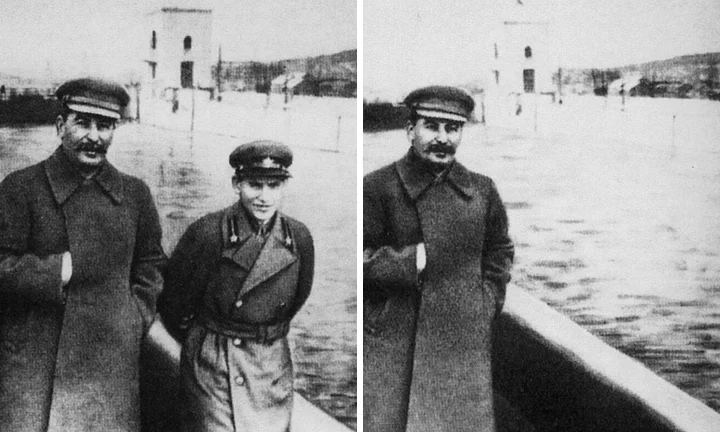
Edit forensics. These are the older techniques used to detect Photoshop edits. They look for parts of an image that differ from the rest, such as a different compression history, different sensor noise or copied areas. They work best on original files. Photos sent through messaging apps are usually compressed again, which removes many of these traces. The example above is a well-known edit: Soviet censors removed Nikolai Yezhov from this 1937 photo of Stalin after Yezhov was executed in 1940.
AI image detectors. These check whether a camera took the photo. A common method removes the visible content of the image and analyses the noise that is left. Camera photos contain sensor noise and colour filter patterns. AI-generated images usually have smoother, more uniform noise, or regular patterns between neighbouring pixels caused by how the model upscales the image. This is why AI images are often described as “flatter”. The example above is the AI-generated image of Pope Francis in a puffer jacket, made with Midjourney in 2023, which many people believed was real. These detectors work well on images from the models they were trained on, but less well on new models, and a recent review lists compression and new models as unsolved problems.
All three checks are useful, but none is reliable on its own. They work best together with checks on the claim itself, such as whether the photo was taken after the date of loss and whether the damage shown matches the repair invoice.
Checking whether documents agree
Checking the content of documents has given better results. In the Find it! receipt fraud competition, the one entry that checked whether line items added up to the total performed well, while entries that only analysed the image did not. In the GPT4o-Receipt study (2026), the most common sign of an AI-generated receipt was an arithmetic error. Human reviewers missed these errors, but language models could check the sums, and the best model reached an F1 score of 0.975.
AI image models will likely get better at arithmetic. Making several documents agree with each other is harder. If someone edits the total on an invoice, they also need to change the line items, the police report, the repair estimate and the policy dates. Here is an example from a motor claim.
Inconsistencies found in one motor claim
First notice of loss
14 March
Police report
12 March
Dates two days apart
Police report
Rear impact
Repair invoice
Two headlamps
Front parts billed for a rear impact
Invoice total
£3,480
Line items
£3,100
£380 difference
None of these proves fraud on its own, since dates can be mistyped and garages make mistakes. Together, they are a good reason to review the claim, and each one can be traced back to the page it came from.
What effective fraud detection looks like
Academic and industry research points to a few common principles.
- Read the whole claim file. Many fraud indicators appear in adjuster notes, medical reports and emails, not just in structured data. Research on Massachusetts injury claims found that combinations of indicators are more predictive than any single one. We wrote about the cost of reviewing only a sample of documents in The Risk of Sampling.
- Check consistency at every level. Within each document, between documents in a claim, against the policy, and against external sources such as company registers.
- Link related claims. Organised fraud often involves the same garage, phone number, bank account or photo across many claims. Óskarsdóttir et al. (2022) found that features based on these links predicted fraud better than standard claim features.
- Use more than one model. In a field experiment with a German motor insurer, a model trained on known fraud cases and an anomaly detection model both found previously undetected fraud, but in different claims.
- Measure what investigators can act on. An SIU team can only review a fixed number of cases each week. The useful measures are how many of the highest-ranked claims are worth investigating, and how much money is recovered.
- Keep a person in charge of the decision. A score decides the order in which claims are reviewed, and an investigator decides the outcome. Each flag should come with evidence the investigator can check, which also matters for regulators.
Claims ranked by fraud score
CLM-20418
3 inconsistencies between documents
9
CLM-20377
Policy started 9 days before the loss
7
SIU capacity this week
CLM-20455
Garage linked to 6 other claims
4
CLM-20402
No flags
0
How Parsewise can help
Parsewise reads every page of every document in a claim file, including scans, emails and spreadsheets. Every extracted value links back to its location on the page. This makes it well suited to consistency checks.
- Cross-document checks. When documents in a claim disagree on a value, such as the date of loss or the amount, Parsewise flags it for review and links to each source.
- Fraud indicators as questions. An insurer’s existing list of fraud indicators can be set up as agents, for example “Was the policy taken out or changed shortly before the loss?” or “Do the invoice line items add up to the total?” Each answer includes citations.
- External checks. Agents can search the web to check whether a repair shop or clinic exists at the stated address, and record whether the results support or contradict the claim.
- A ranked list for investigators. The answers are combined into a score for each claim, and a dashboard ranks claims for the SIU with the reasons listed.
For image and file checks, such as comparing photo metadata with the date and place of loss, finding photos reused from earlier claims or running a tampering detector, we build custom analysis on top of Parsewise for each client. These results are added to the same score, so an investigator can see a suspicious photo alongside any inconsistencies in the documents.
Summary
Detecting edits in a single image or document is becoming less reliable as AI editing tools improve. Checking whether all the documents in a claim agree with each other, and with external sources, is harder for fraudsters to get around. We think fraud detection should start there, with image and file checks as additional inputs.
