
Navi is now state of the art on OfficeQA Pro V2, Databricks' benchmark for grounded reasoning: answering hard questions from a large set of documents, where every answer has to come from the sources. A benchmark can score that because it knows the right answers. The people who use these answers at work don't. When an AI returns one figure from 120,000 pages of reports, the person who signs off on it has to check the work. This post shows why that is much easier with Navi and Parsewise agents than with general-purpose agents like Claude Code or Codex.
The result in short
OfficeQA Pro V2 has 90 questions over close to 120,000 pages of US Treasury reports. They span more than two centuries, and many are rough scans. A typical question needs figures from five or six documents. Navi answered 73.3% correctly at $2.24 a question. Claude Code on the same model, Opus 5.5, got 63.3%. Nik's write-up covers how we got there.
One caveat: on the benchmark, Navi ran alone and explored the corpus like the other harnesses did. In Parsewise, Navi works with agents that read every page of a project first. That pairing is what this post is about, and we'll publish a benchmark run with both soon.
A score needs an answer key. Experts don't have one
A benchmark grades each answer against a known right one and reports the average. Even at 73.3%, about one answer in four is wrong. The benchmark can live with that. A team at work can't, because nobody hands them the answer key. An analyst, underwriter or auditor has to decide, answer by answer, whether to rely on what came back.
So in grounded reasoning, a correct answer is only half the job. The other half is making it quick for an expert to check, without redoing the work.
Every number goes back to a page
Take the question from our last post: "How much did the government spend on the Patent Office in the 1920s?" Navi answers $29.4M (the totals in this post are illustrative). Scroll or step through the figure to see what a reviewer has to check behind that one number.
Five things to check behind $29.4M
0 read0 relevant
Navi answers $29.4M for Patent Office spending in the 1920s. There is no answer key, so a reviewer has to check what that number rests on.
Checking an answer has two parts. The first is checking the numbers that were cited: open each linked page and find the figure printed there. Most tools give you links for that.
The second part is harder. It's checking what was not cited. Did a later report revise the 1924 figure? Did one volume list the office under a different heading? Did the search stop once it had ten plausible numbers? This is where the shape of the run matters.
A hundred tool calls are hard to check
General-purpose agents like Claude Code and Codex work through files one tool call at a time. They list folders, open contents pages and search for "Patent Office". They switch words when a volume uses a different heading, zoom into blurry scans, hit dead ends and backtrack. That works well when you're exploring, but it leaves a reviewer a lot to read.
One question, 142 tool calls
Claude Code session
> How much did the government spend on the Patent Office in the 1920s?
⏺Bash(ls treasury_reports/)
⎿ 14 directories
⏺Read(fy1920/contents.md)
⎿ Read 212 lines
⏺Search(pattern: "Patent Office", path: "fy192*")
⎿ Found 63 lines in 8 files
⏺Read(fy1924/p394.md)
⎿ Read 38 linesSuperseded
Pages it opened, in order
Claude Code gets the same question and the same folders of reports. It starts the way a person would: list the folders, open a contents page, search.
Even if you read all 142 calls, you only see the searches the agent thought to try. The log can't tell you whether a renamed office, a misread character or a footnote hid a revision in the 99.97% of pages it never opened.
The search is also tangled with the reasoning. The contents page read on call 2 decides which folders get searched on call 3, and that decides which pages get opened after. One bad filter early on shapes everything after it. To trust the answer, a reviewer has to check the agent's search strategy as well as its citations.
Flat beats deep when a human has to check
Parsewise agents turn that around. Instead of one long walk through folders and search results, our data engine asks the same narrow question of every page, each on its own.
Each page returns a flat record: nothing relevant, or the figure, its year, any revision note and the page it came from. Because every page is read on its own terms, an FY1926 revision filed under "Bureau of Patents" lands in the table without anyone guessing that heading in advance.
Navi then works over 27 records, not 120,000 pages. It settles revisions and scan errors in the open and adds up the ten yearly figures.
Checking a flat run from end to end
Same question on every page
Does this page report Patent Office spending in the 1920s? Return the year and amount.
One table of hits
+ 21 more rows
Total and source
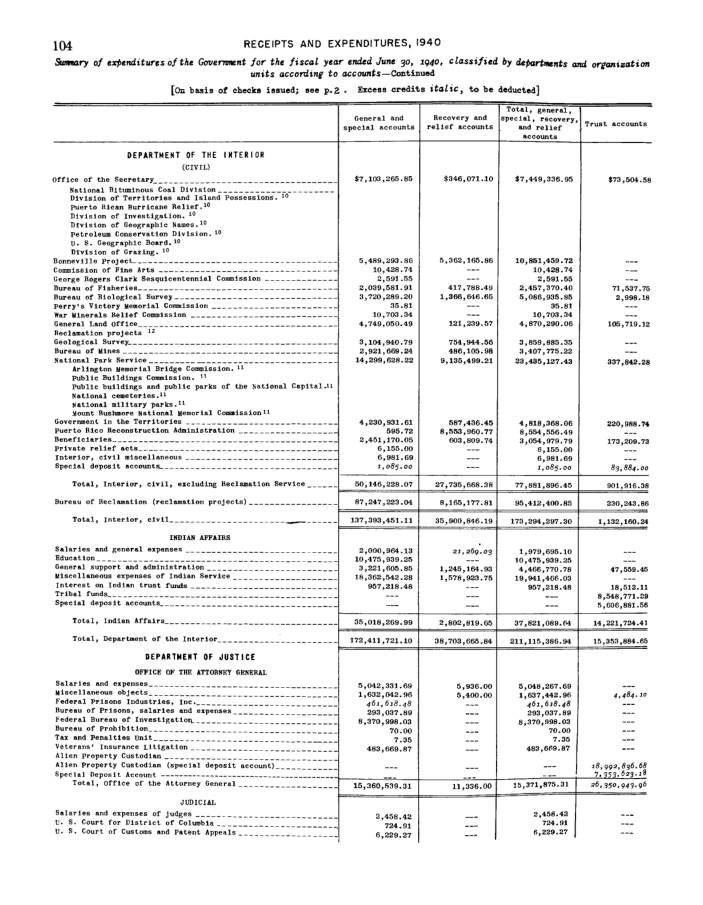
A later audited report restates FY1924 under a new heading. It replaces the p. 394 figure.
Click the revised or scan-checked row to see the figure boxed on the scanned page. Checking it takes a minute, not a second search.
For the reviewer, checking comes down to two things. First, the question sent to every page is one sentence you can read in five seconds, and every page got it. Second, every candidate value sits in one table, next to the figures that were replaced and the exact pages they came from. You don't have to guess whether the agent searched for the right word or opened the right appendix.
The two approaches side by side
Put side by side, the difference is in what a reviewer has to read.
Two ways to answer, from the reviewer's chair
| Exploratory agentClaude Code, Codex | Flat passParsewise agents and Navi | |
|---|---|---|
| How it searches | Branching | Flat |
| Pages read | 0.03% | 100% |
| What a reviewer reads | 142 tool calls | 1 question, 27 rows |
| Checking a cited number | Open the page | Figure boxed on the page |
| Checking nothing was missed | Can't tell | Every page read |
| Revisions and conflicts | Buried in the log | Side by side |
| Best for | One-off questions | Repeatable, high-stakes work |
Exploratory agents have real strengths. For a quick question over a folder you'll only touch once, they start right away and adapt as they read. You don't need to read 120,000 pages to check one paragraph in a file you already know.
A flat pass reads more up front, so it's heavier for throwaway questions. It wins on high-stakes work that repeats. There, reading every page once costs little next to an expert redoing the analysis because they can't tell what was missed. And once the records exist, follow-up questions in Navi reuse them without reading the corpus again.
What comes next
Benchmarks will keep grading against answer keys, and they should. But at work, grounded reasoning is only useful if an expert can check the answer in minutes. Next, we'll publish the OfficeQA Pro V2 run with Navi and Parsewise agents working together. If you'd like to see a flat run and its table on your own documents, book a demo.
