At the center of the Parsewise platform is the Data Engine. From a user's perspective, the flow is straightforward: upload documents, describe what you need from them, launch agents, review results, and refine. Behind the scenes, the platform seamlessly handles extraction, resolution, validation, deduplication, and cross-document reasoning. The structured data it produces feeds everything else on the platform, from Navi's contextual analysis to automated evaluation and client-ready reports.
As we shipped features around this workflow, each capability landed on the page where it made the most sense at the time. With the platform growing and a deeper understanding of how users move through it day-to-day, we took a step back and streamlined the user experience. Here is what we changed.
Fewer Pages, Faster Decisions
Agent configuration, extraction progress, and consistency now live in a single view. Users can now define, monitor, and review their agents at a glance, enabling more efficient iteration.
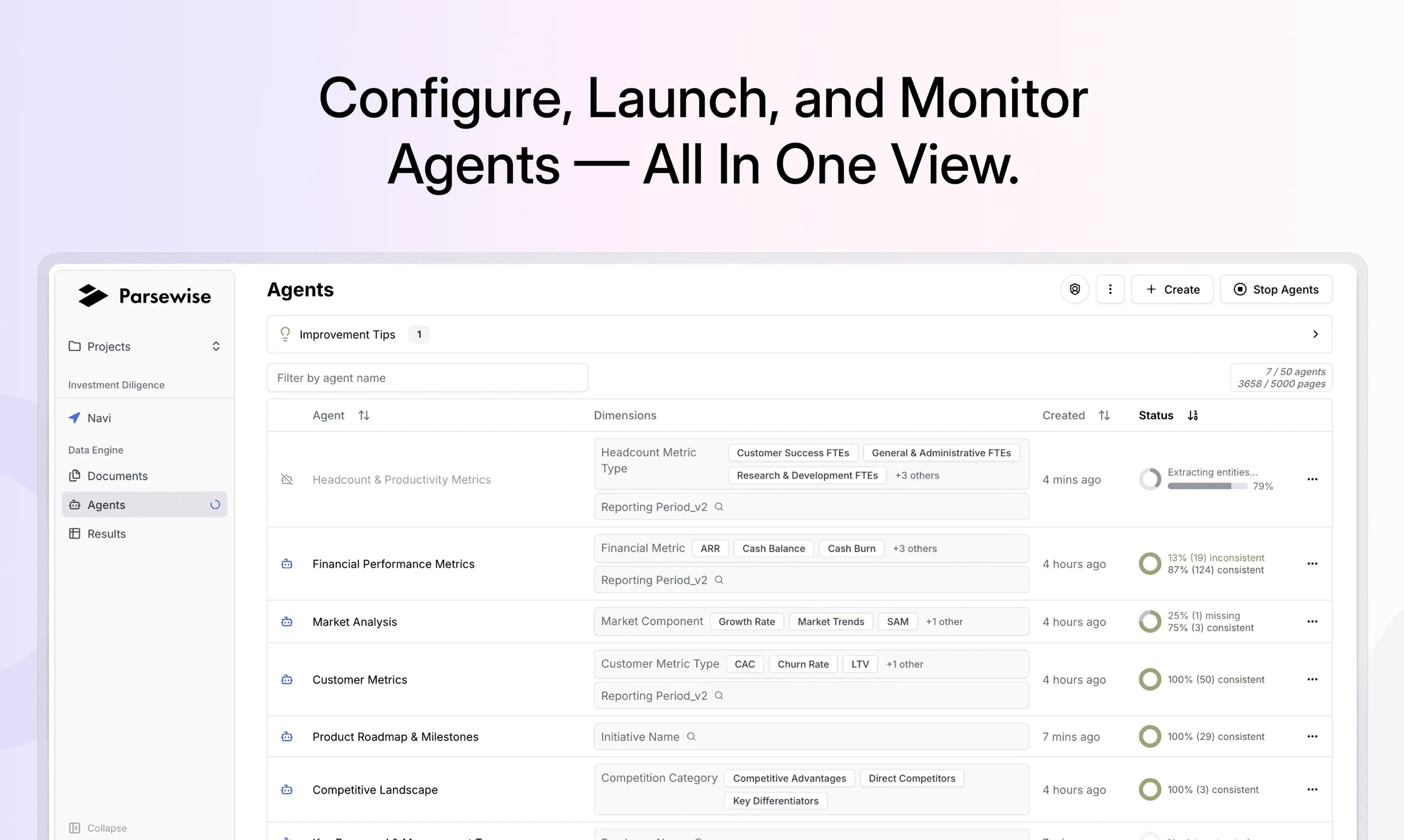
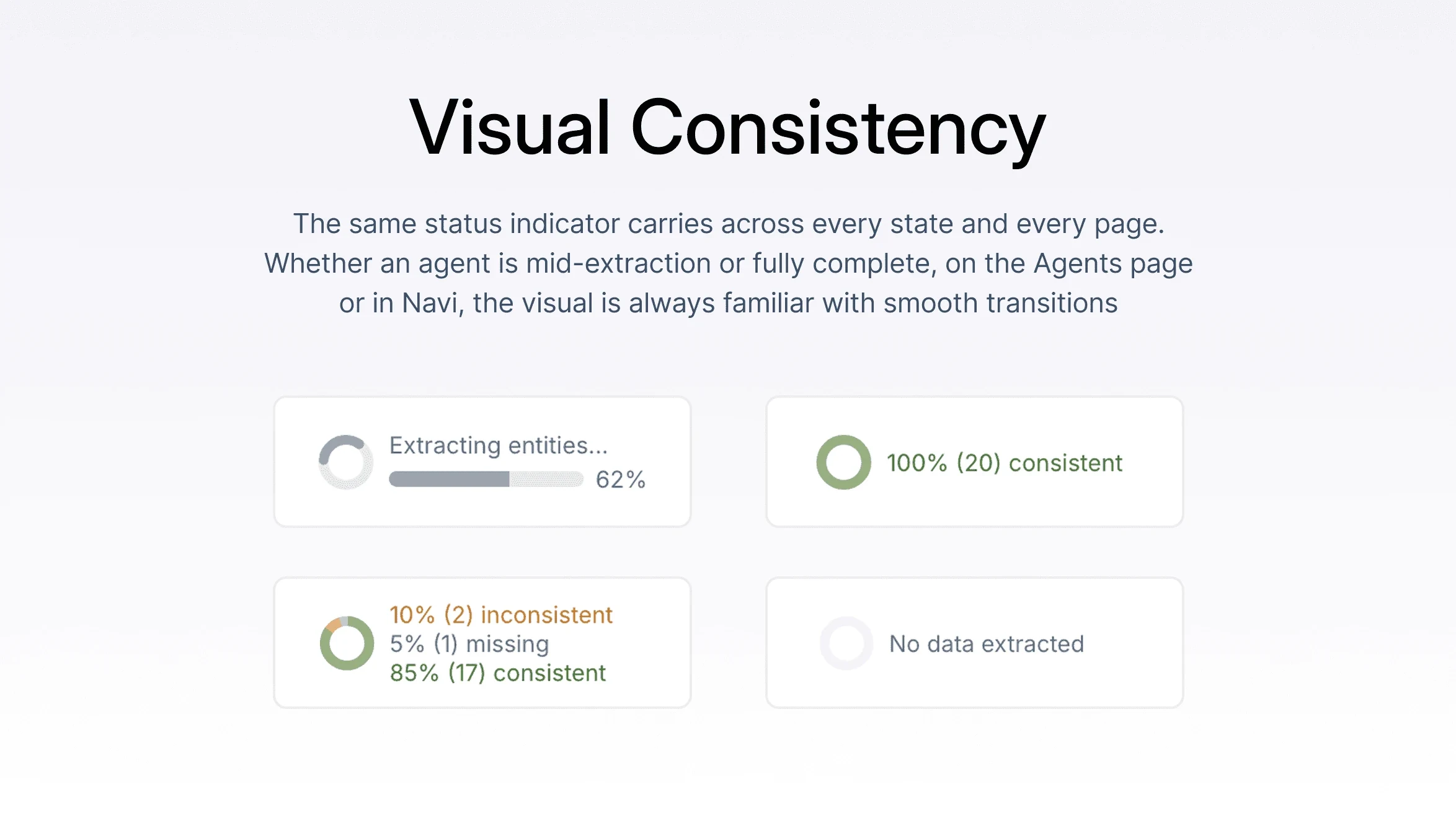
When you launch extraction, the Status column shows real-time progress: an animated spinner that transitions smoothly into a results consistency chart when extraction completes. The spinner and chart are deliberately designed to feel like the same visual element in different states: same size, same position, same stroke width. The same status graphics are also used by Navi, so the visual language is consistent regardless of where you are in the platform.
Every cell in the table is also a direct entry point. Hover over an agent, and you can jump straight to its results or edit its configuration inline, without leaving the page. For users managing dozens of agents, the most common next action is always one click away. Frequently-used actions like bulk-selecting agents to view their results together, or downloading all documents at once, are now surfaced directly.
Across the platform, the table experience is now unified. Sticky headers keep column labels visible while scrolling, date and number columns sort descending on first click (because you almost always want the most recent first), and all tables (Projects, Documents, Agents, Results) share the same visual language. Interacting with the Results Table in particular feels familiar to anyone who has worked with a spreadsheet, but with the added depth to drill into any value, trace it back to its source document, and understand exactly how it was extracted.
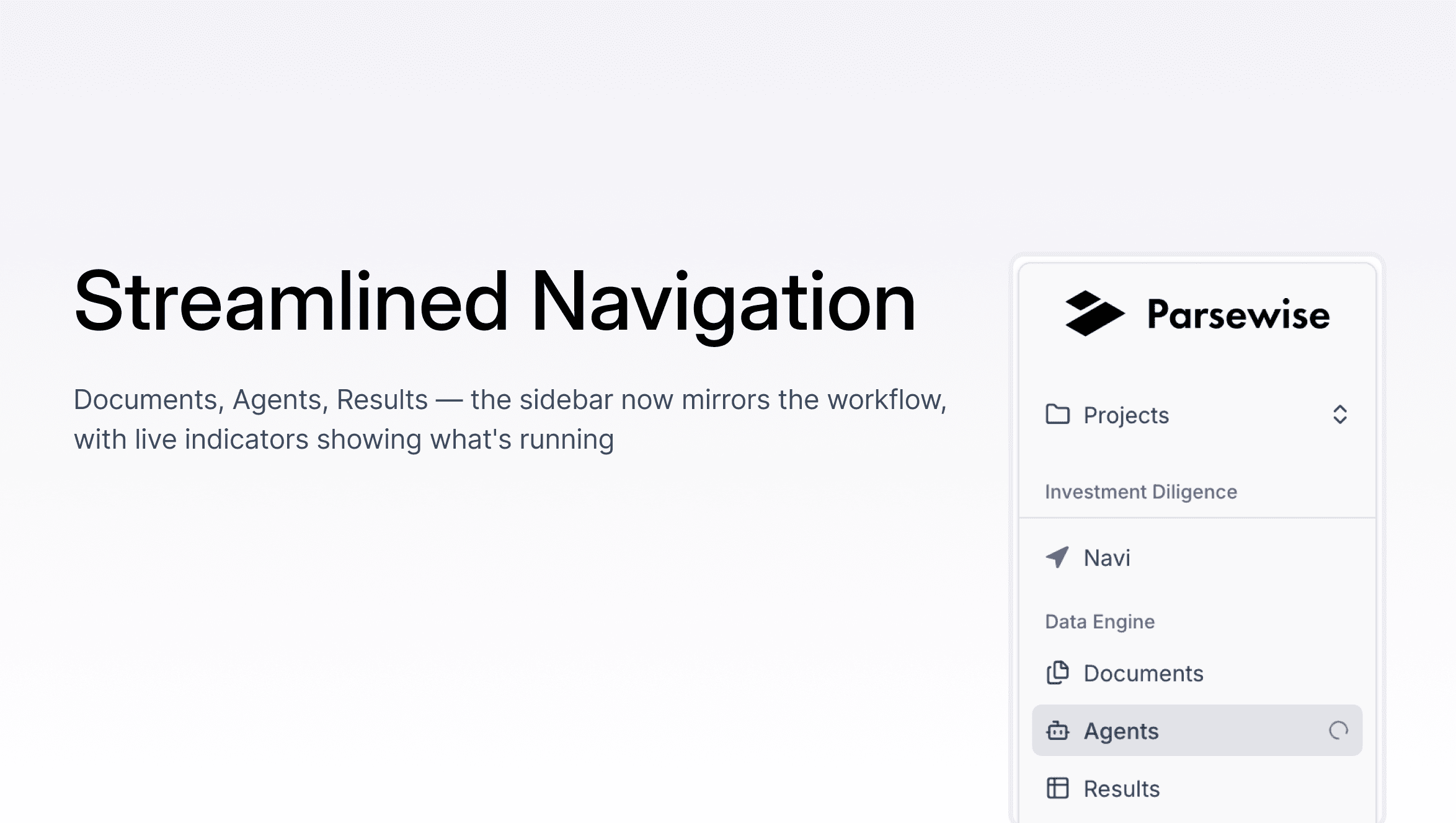
The sidebar now has a single "Data Engine" group with three items: Documents, Agents, Results, matching the workflow sequence. Each item also carries a live status indicator, so you can see at a glance from any page whether documents are processing or agents are running. This is especially useful for longer-running reasoning tasks: you can work on something else in the platform and know exactly when the extraction finishes without having to check.
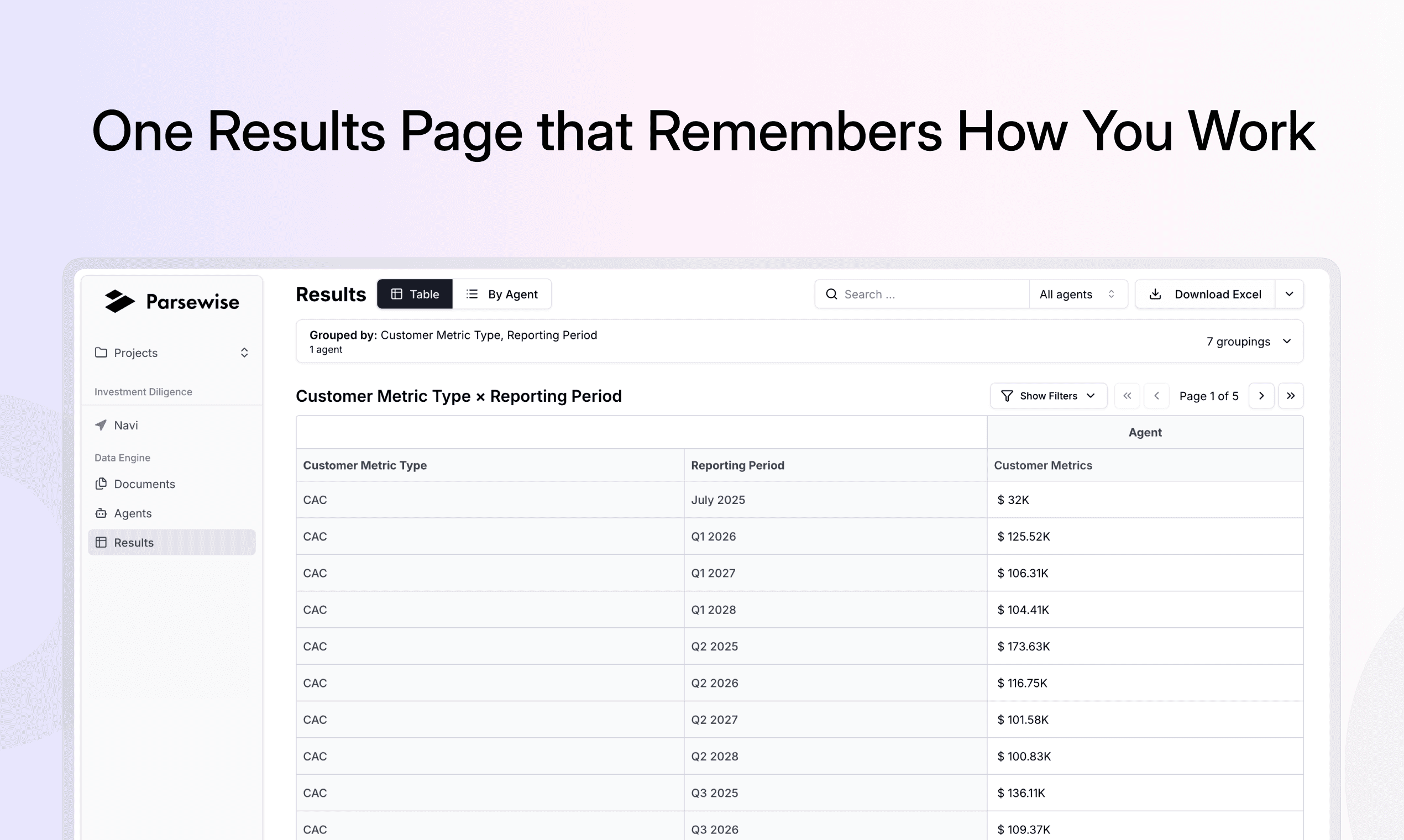
Results can be viewed in two ways. The aggregate “Table” view is built for cross-agent analysis, such as comparing multiple metrics across deal opportunities. The “By Agent” view is for deep diving, for example, to understand the different risk exposure for a specific risk flag in a portfolio. The platform saves your preferred view as the default, so clicking "Results" always takes you straight there. Similarly, exporting defaults to whichever format you last used, whether that is a raw Excel download for further analysis or a filled template ready to share with stakeholders.
Why This Matters
Under the hood, the Parsewise Data Engine orchestrates serious complexity: from routing work across multiple LLM providers in real time, to extracting entities in parallel across thousands of pages, to resolving and deduplicating results across agents into structured, auditable data. That machinery continues to improve.
But the best infrastructure is invisible. Our users are domain experts, and the interface should let them focus on what matters: their decisions. The more the platform mirrors the simplicity of the underlying workflow, the more value our users get from it.
That is the principle behind this release, and we will keep applying it. If you have feedback on how the experience can be better, we would like to hear it.